Preserving a piece of Flagstaff history
Gallery: Restoration work for the Nativity of the Blessed Virgin Mary chapel
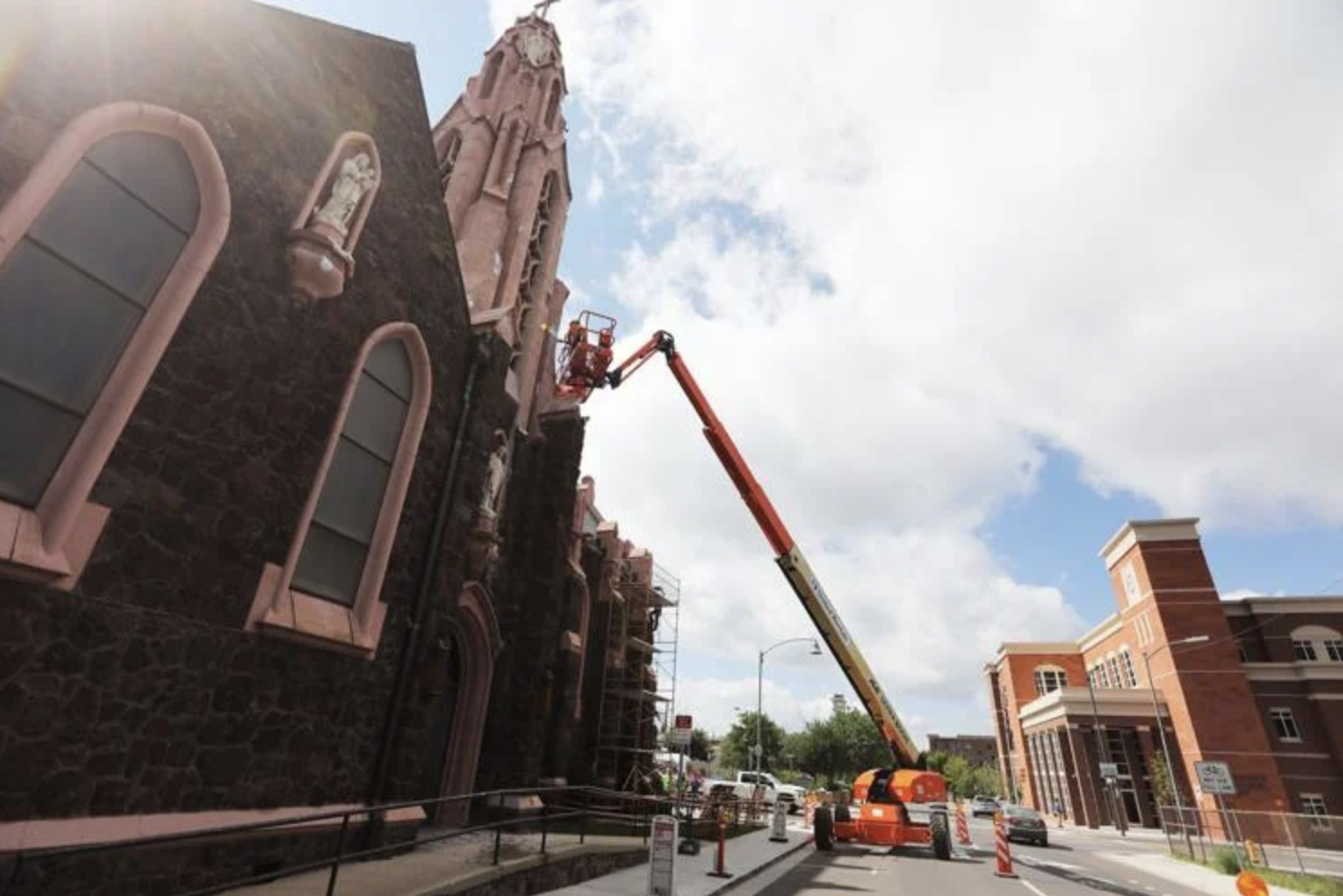
Restoration work is being done on the the Nativity of the Blessed Virgin Mary chapel located in downtown Flagstaff. The building was originally erected in 1929 and has over time become a staple of the city.
Kibby’s report went on to outline several immediate priorities such as creating rubber molds of the gargoyles and inspecting the stained glass windows.
Much of that work would be completed later that year in August of 2015 during the second phase of the restoration. Winterization of the exposed concrete was applied to prevent further weathering temporarily, the stained glass windows were inspected, and the gargoyle molds were made.
Flagstaffians have long admired the Gothic-style chapel that sits just north of the historic downtown area.
Built on the corner of Beaver Street and Cherry Avenue in 1929, the Nativity of the Blessed Virgin Mary chapel has stood for almost a century, and is still used today as a venue for concerts, weddings and baptisms.
But if the historic landmark is to be preserved for another 100 years, it is going to take a great deal of community support, according to a Flagstaff native leading the chapel’s $2.5 million restoration project.
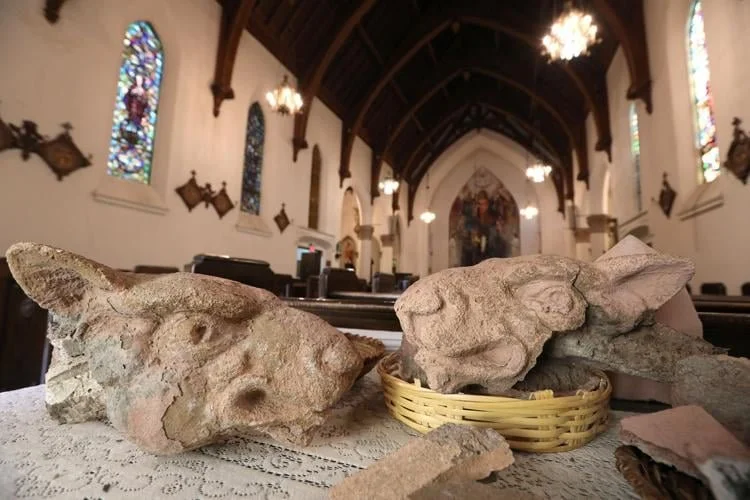
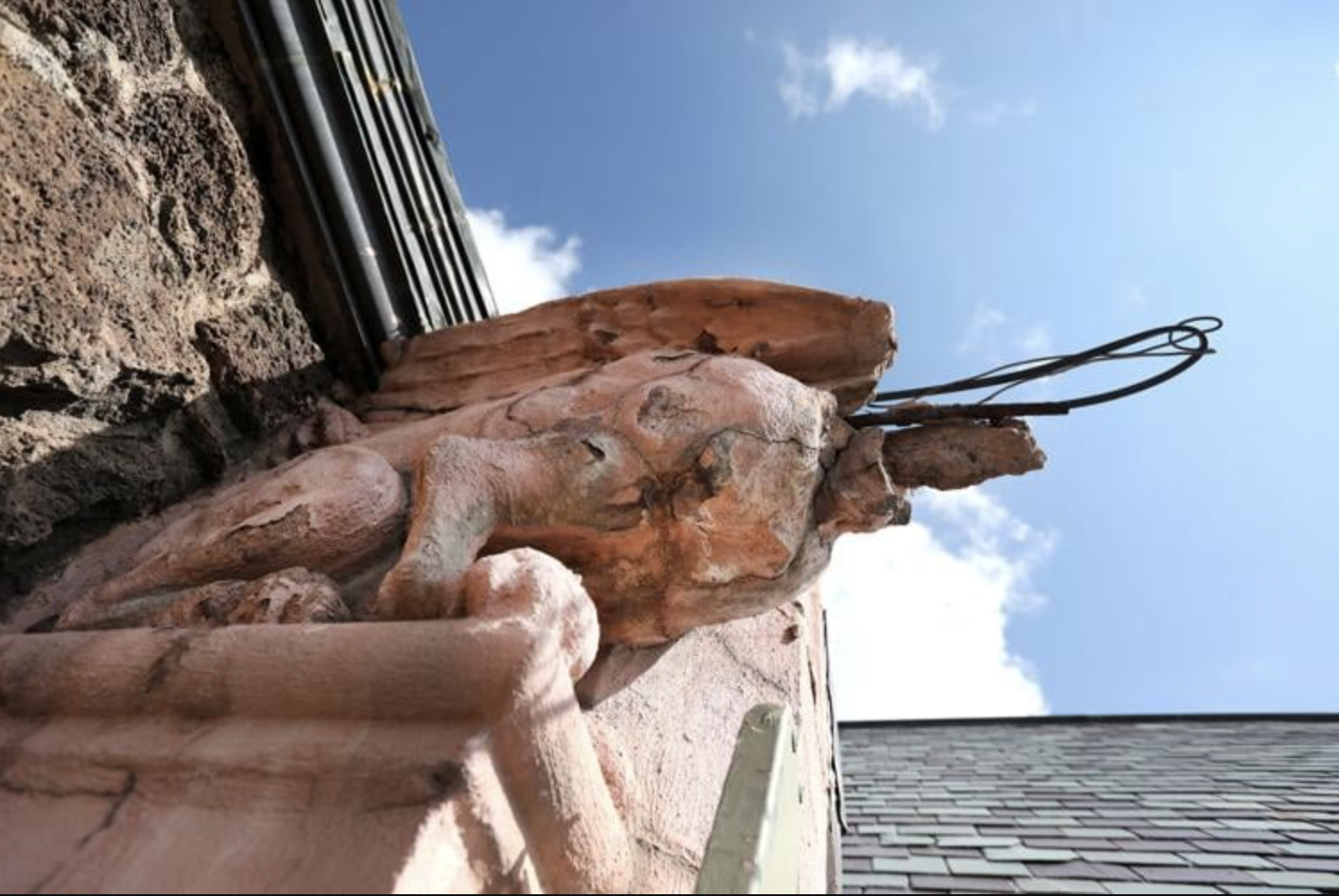
In recent years, the Catholic chapel has increasingly shown its age. Look closely, and you might notice the decaying pink concrete, or the warping stained-glass windows, some cracked and in dire need of repair. Even the gargoyles, once functioning downspouts and mighty protectors of the church, are missing heads and limbs.
As time keeps churning, Flagstaff’s four seasons continue to take a toll on the regional cornerstone.
Roberta “Birdie” Wallace and her family first noticed the concerning state of the chapel nearly six years ago while on a walk. Having attended services in the church for generations, Wallace said her family knew something needed to be done to preserve the piece of Flagstaff history.
“We don't want to take any half measures,” Wallace explained. “The point is to make the church last for another 100 years.”
Making progress
Restoring a building as old as the Nativity chapel is no easy task. Not only is the process expensive, but it also requires a high degree of expertise and attention to detail.
To oversee the restoration effort, Wallace enlisted the help of the local Babbitt Brothers Foundation, which has assisted with the preservation of the historic downtown district since the early 1990s.
The chapel restoration began later in 2015 with an inspection from Charles Kibby, a historical masonry expert with Los Angeles’ CGI Preservation who reported “widespread decay” throughout the structure’s pink decorative cast stone. Due to the complexity of the restoration, Kibby recommended consulting an engineering firm with expertise in historical masonry.
Having bought some much-needed time, the focus of the project shifted to assessing the extent of the chapel’s ongoing deterioration further. Adamm Gritlefeld, stained glass window restoration expert of Santa Monica’s Adamm’s Gallery, conducted the first inspection of the chapel’s Munich-style stained glass windows that summer.
Gritlefeld found that many of the windows appeared to be in remarkable condition and in need of only minor repairs and cleaning. Others, however, were seriously compromised and needed immediate action -- including the largest piece in the choir loft, the Assumption of the Blessed Virgin.
Wallace has now created an itemized list of recommended work for each window, and ranked priorities for restoration and repair. As the work begins, the preservation project will look to Oakland-based Ariana Makau, owner and principal conservator of Nzilani Glass Conservation, whose company has previously worked on other notable relics with stained glass, including San Francisco’s Grace Cathedral.
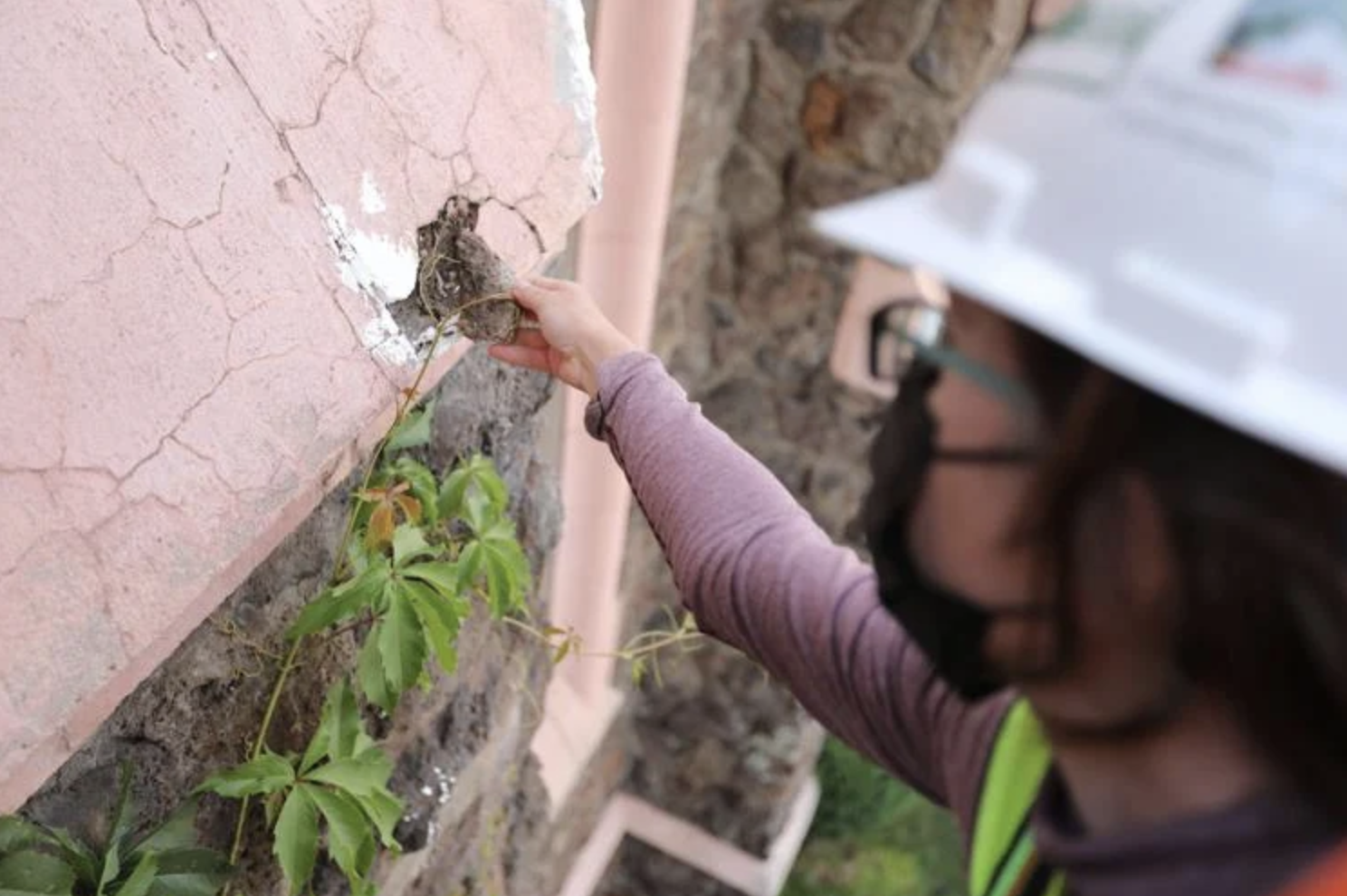
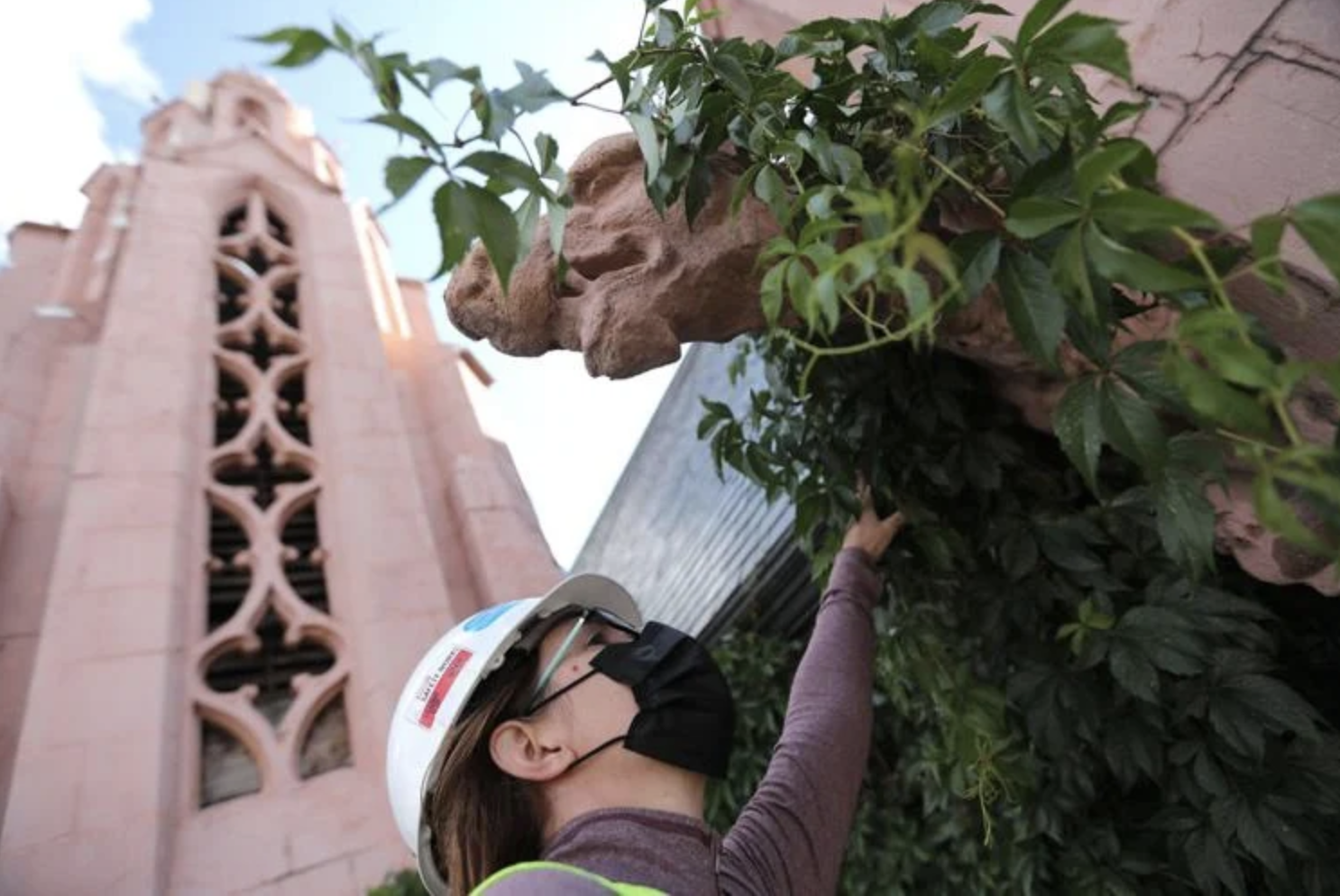
Engineer Marisa Turner pulls roots of a Virginia creeper plant out of a section of the decorative cast concrete near the roofline of the Nativity of the Blessed Virgin Mary chapel while making an assessment of how damaged the concrete is as part of a restoration proposal.
Jake Bacon, Arizona Daily Sun
In 2016, the restoration brought on Simpson, Gumpertz and Heger (SGH), a San Francisco-based investigative engineering firm specializing in historic masonry, to analyze the chapel’s decorative concrete.
SGH discovered the primary factor in the decay to be an alkali silica reaction -- a chemical condition caused by the presence of local volcanic silica in the mixed concrete. As the structure takes on water, the reaction creates an expansive gel that causes damage.
The condition is irreversible, according to SGH.
“The gel expands within the concrete blocks and produces cracks and spalls. ASR is a chronic condition that will continue to crack and spall the blocks; it can only be managed (not cured). Some precast blocks, specifically the gargoyles and some statues, are too cracked and deteriorated to remain and should be replaced in-kind,” according to the report.
To help with restoring the decorative concrete, local engineering firm Civil Design & Engineering completed a LIDAR laser scan of the exterior free of cost in 2018. Wallace said the scan is vital to determining the proper dimensions of the structure as plans for an exterior restoration are completed.
Rooted in Flagstaff history
The chapel still resides on land donated in 1929 by Wallace’s great-grandfather, David Babbitt. But before the current chapel was constructed, the original Church of the Nativity celebrated its first midnight Mass on Christmas of 1888.
The original Nativity church building (located on the southwest corner of Brannen and Elden avenues) was built of brick and featured two 70-foot tall spires “only rivaled by the pine trees reaching for the heavens," according to a history of the church written by Wallace’s mother.
Prior to the original church’s construction, the historical account suggests that religious services in Flagstaff were confined largely to private homes and schoolhouses. It was not until 1890 the Nativity Church would be assigned its first resident pastor.
In 1930, the church was relocated to align with the concentration of Flagstaff residents better. The historical account pegs the original cost of constructing the Nativity of Blessed Virgin Mary Chapel at $100,000, not accounting for inflation.
Original blueprints for the chapel are viewable on the restoration project website. Notably, the original plans feature a decorative wrought iron gate for the baptistry that Wallace hopes can be fabricated and included in the restoration.
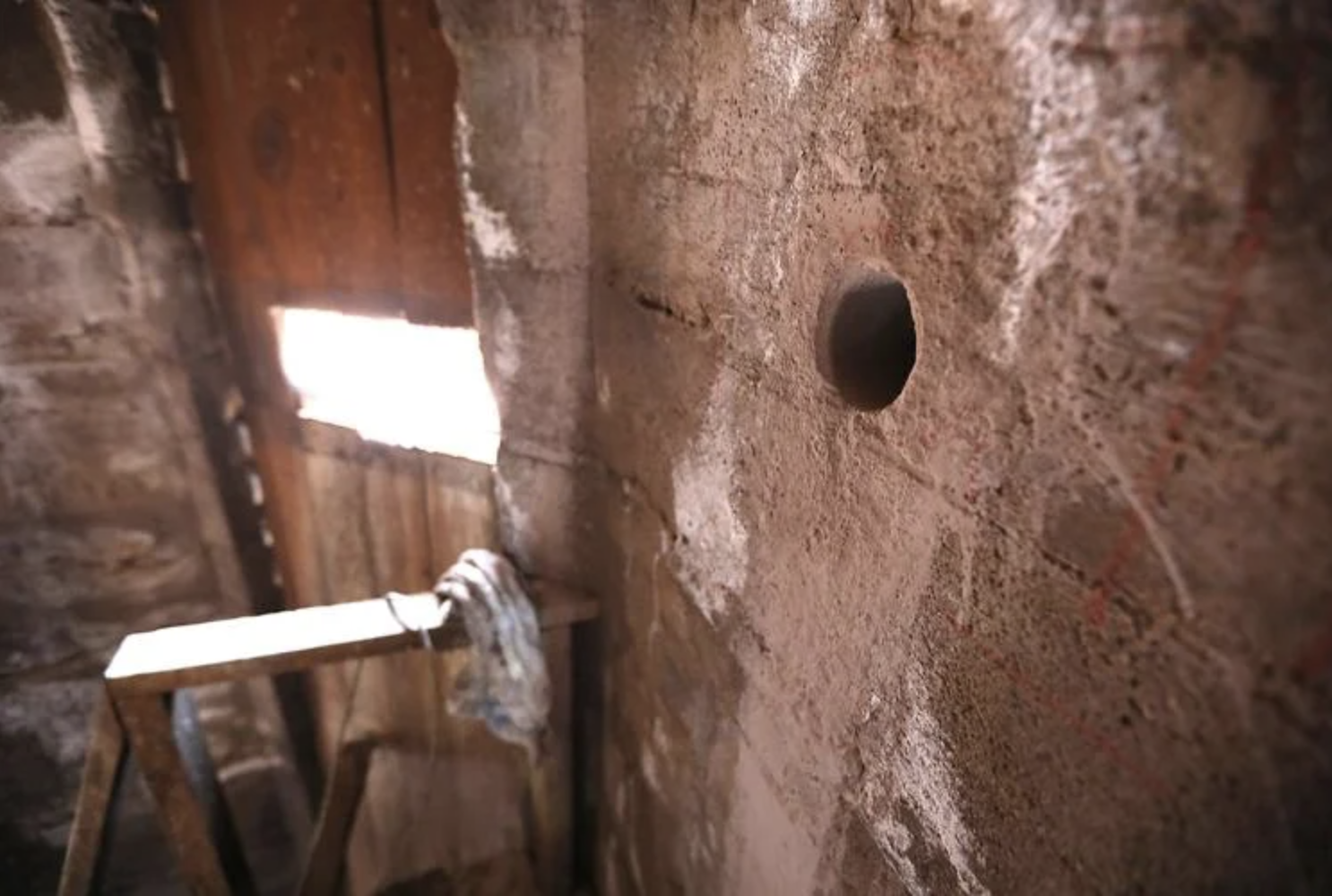
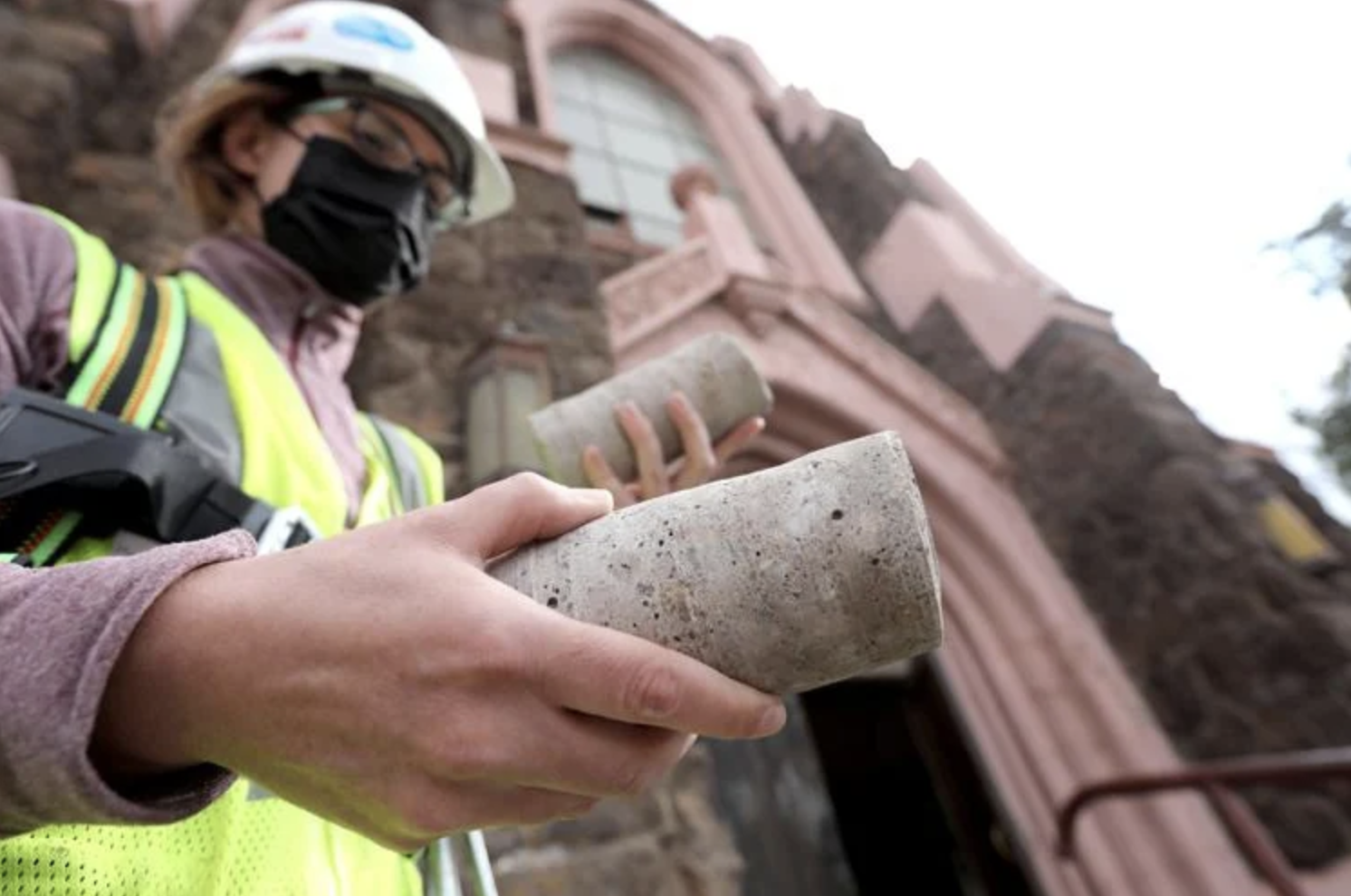
Engineer Marisa Turner holds concrete core samples drilled from the tower of the Nativity of the Blessed Virgin Mary chapel. The core samples will be studied to test the strength of the concrete holding up the tower.
Jake Bacon, Arizona Daily Sun
Wallace also theorized the decorative concrete exterior (known for its unique pink coloring) was originally closer to a deep maroon, the color of local cinder hills complementing the natural color of the surrounding volcanic malpais rock. But the sun-kissed exterior had long since faded.
Samples of the cast stone indicate a parge coat -- a thin cement layer -- was once applied as a protective coating, possibly tinted to resemble sandstone. The parge coat was subsequently painted with an elastomeric paint that has long since faded, and which, unfortunately, served to trap moisture within the decorative concrete exacerbating the deterioration process.
“The original color of the church was this beautiful cinder color,” Wallace explained. “The color can still be seen on the interior stained glass window tracery in the choir loft, which remains untouched since construction.”
Wallace said the plan is to bring back the maroon color as a part of the larger effort to stay true to the original blueprint’s intentions.
More work to be done
Years later, Wallace still devotes plenty of time to the chapel and the restoration process. She keeps detailed records of the work that has already been completed and what still needs to be done, occasionally updating supporters of progress on the restoration’s website.
Featured prominently on the website’s homepage is a quote from Saint Francis of Assisi. It reads: “Start by doing what's necessary; then do what's possible; and suddenly you are doing the impossible.”
Engineer Marisa Turner lifts back a cloak of Virginia creeper covering one of the gargoyles below the roofline of the Nativity of the Blessed Virgin Mary chapel.
Jake Bacon, Arizona Daily Sun
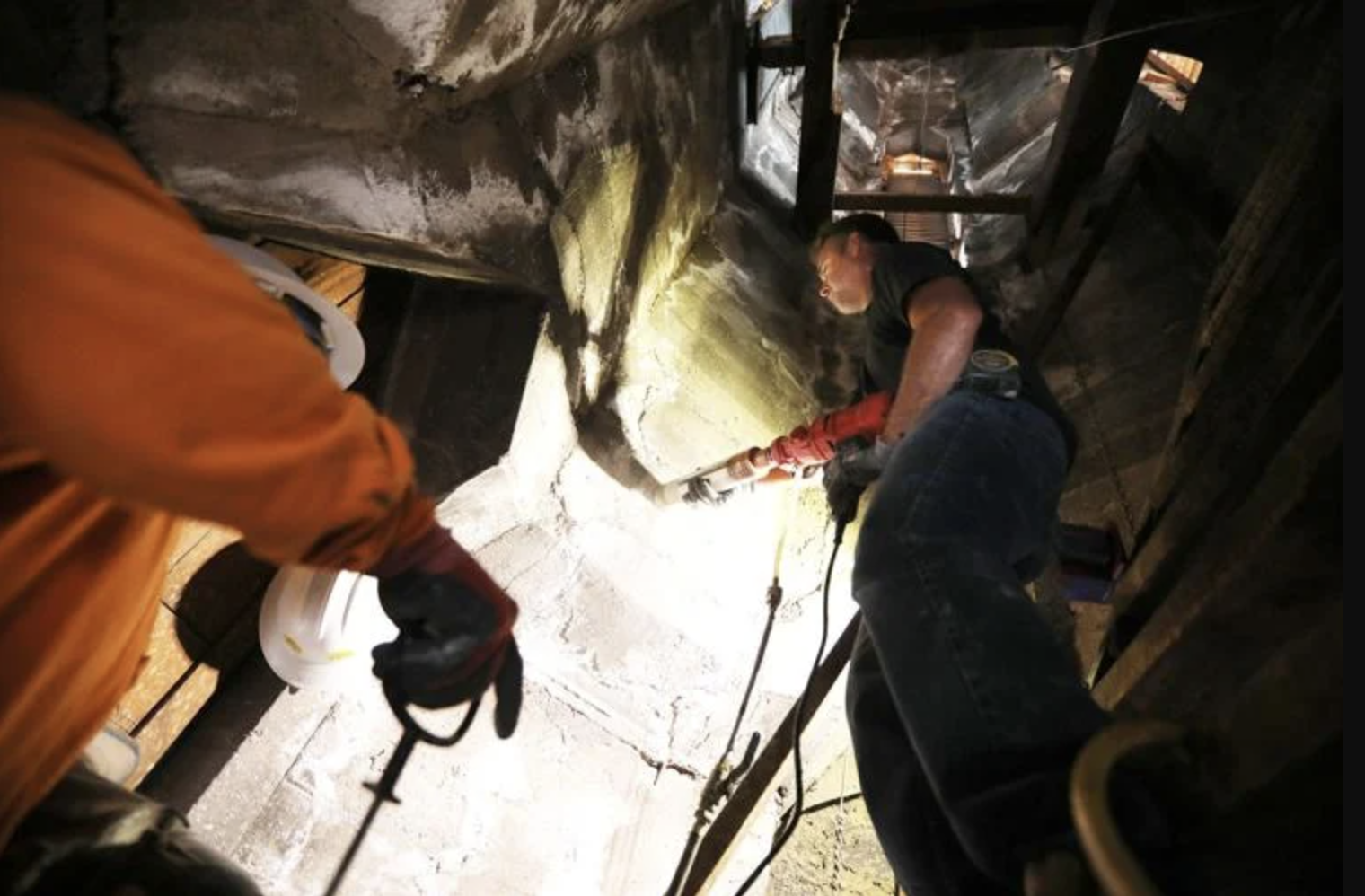
Wallace was reminded of the quote last week when engineers from SGH returned to continue testing the structural elements of the chapel. The engineers took core samples from both the interior and exterior to ensure chemical deterioration was not present in the substructure, also deconstructing a few cast stone blocks to determine original mechanical attachment mechanisms and the depth from the finished surface to the substructure.
Next up will be creating a construction plan for the restoration -- a milestone for the project that to date has mostly consisted of immediate repairs and assessment.
“We are not doing the impossible quite yet, but we're still working on the possible,” Wallace said. “It’s setting the stage for a true restoration, and eventually we are going to get to the point where we have a beautiful construction plan.”
But before a construction plan can be drawn up, the project will need to find additional funding. The plan alone is expected to cost more than $100,000, and once complete, allows the project to move into the bidding phase.
SGH has estimated the entirety of the project’s expenses to fall in the $2 million to $2.5 million range. And while grants from the state, federal government or church officials may help cover future costs, the project has largely been made possible by individual donations.
Wallace referred to the restoration as a grassroots effort, but hopes it is a cause the entire community can unite behind, she said.
“There is stress involved in this. But I can't worry about whether it gets done or not, because that's not up to me,” Wallace said. “I'm happy to put in the effort, but the actual fruition of the project is up to people who are willing to support the restoration project.”
A community effort
The restoration work would not have been possible with without the support of several Flagstaff companies, Wallace said.
Here are the companies that have provided services to the restoration effort free-of-cost:
CDE&E engineering - Exterior LIDAR laser scan
Loven Contracting - Labor and consulting
Another Plumbing Company - Interior and exterior core drilling
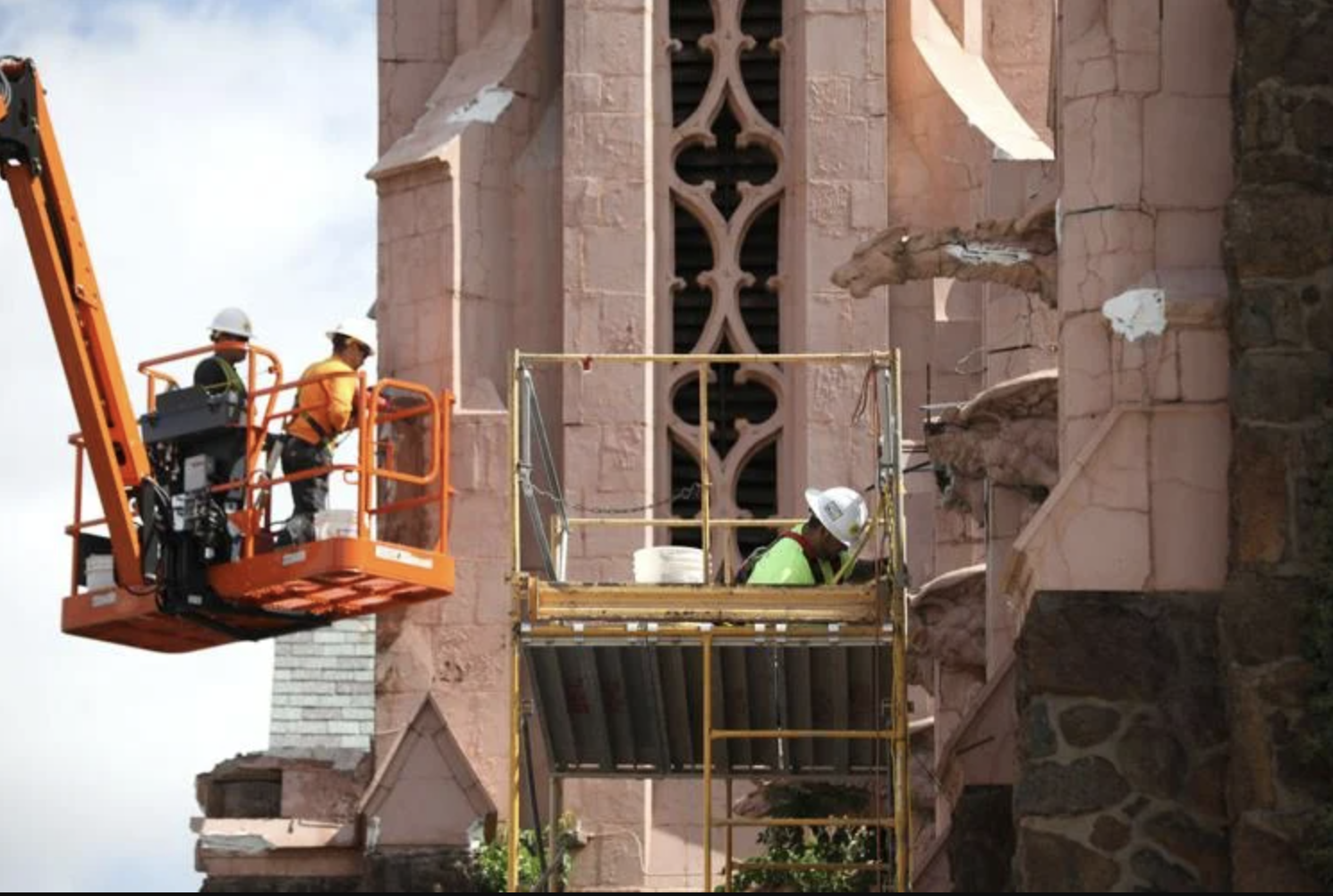
United Rental - 120' boom truck rental
Total Rental - Scaffolding rental
Read the original publication here