Fillet Panel
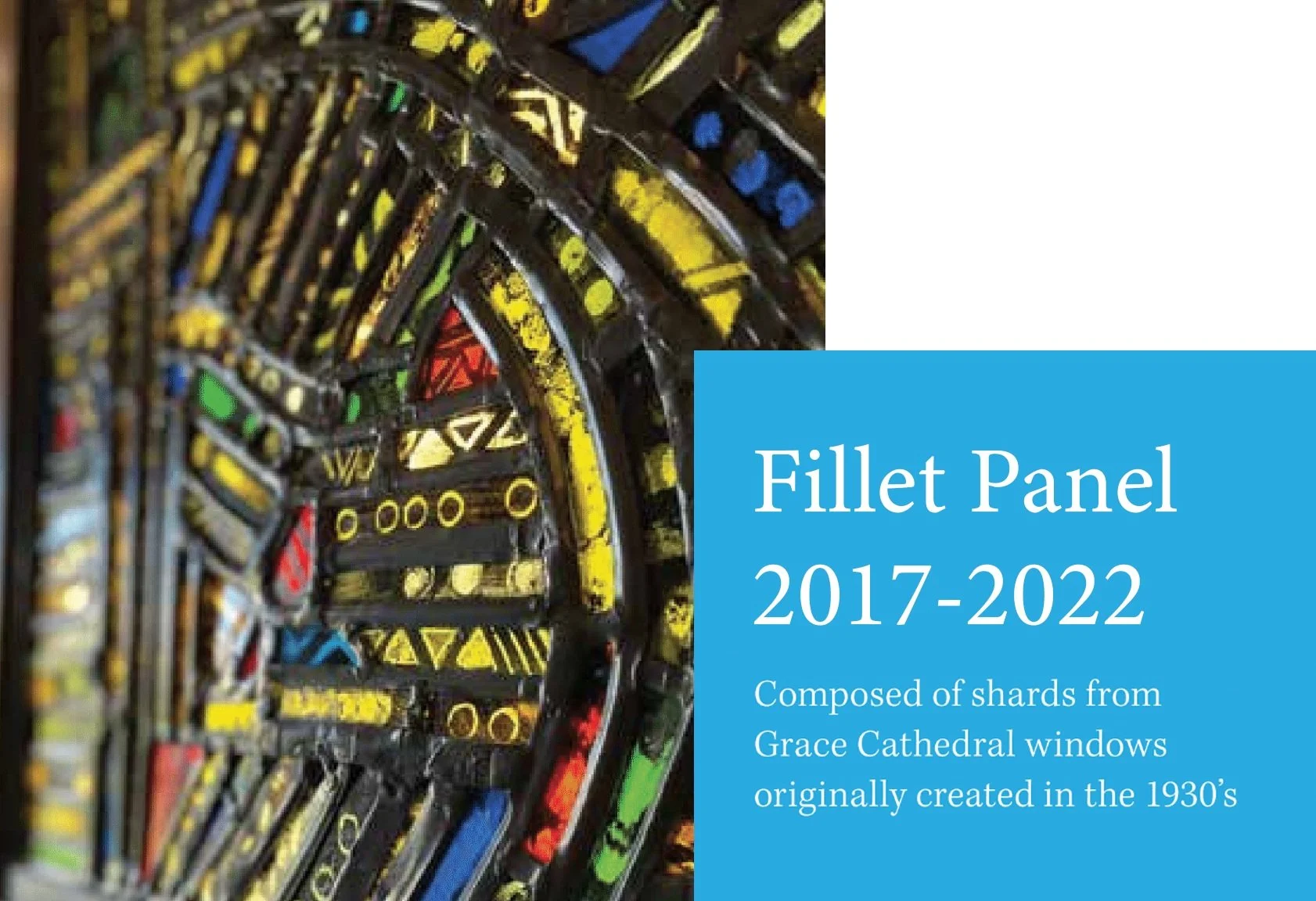
Background
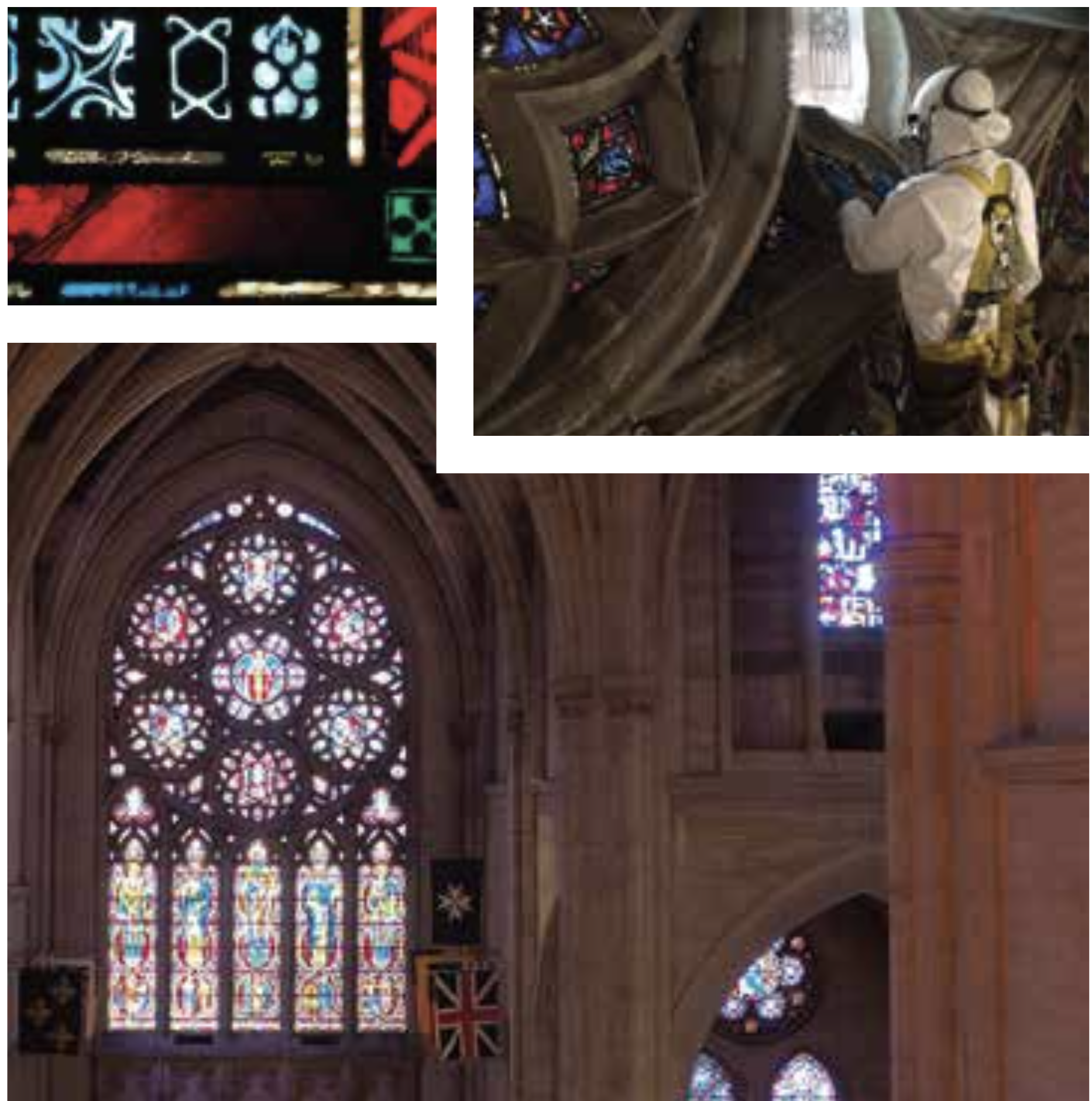
Fillet or “sacrificial border” pieces are traditionally incorporated at the edge of large stained glass panels to facilitate quick removal of entire windows during times of war or conflict. These thin borders could be smashed to disengage the windows from the architectural framework, while the rest of the window remained intact. Once peace was reinstated in the region, new glass was cut, painted and built back into the edges of the panels which were then reinstalled into their architectural setting, ready for the next time to be of service.
When Nzilani Glass Conservation was contracted to conserve the Connick Studio’s Old and New Testament Windows (circa 1932 and 1931) at Grace Cathedral in 2017, it was noted that the design style emulated medieval windows with fillet borders set into a traditional “U” channel framework. Luckily, the team was not under the pressure of conflict, and managed to preserve the majority of the fillet pieces. Yet, as a result of their original installation procedure, some pieces were damaged beyond their inherent use as part of the removal process. Instead of disposing of them, every single shard was kept.
Creation
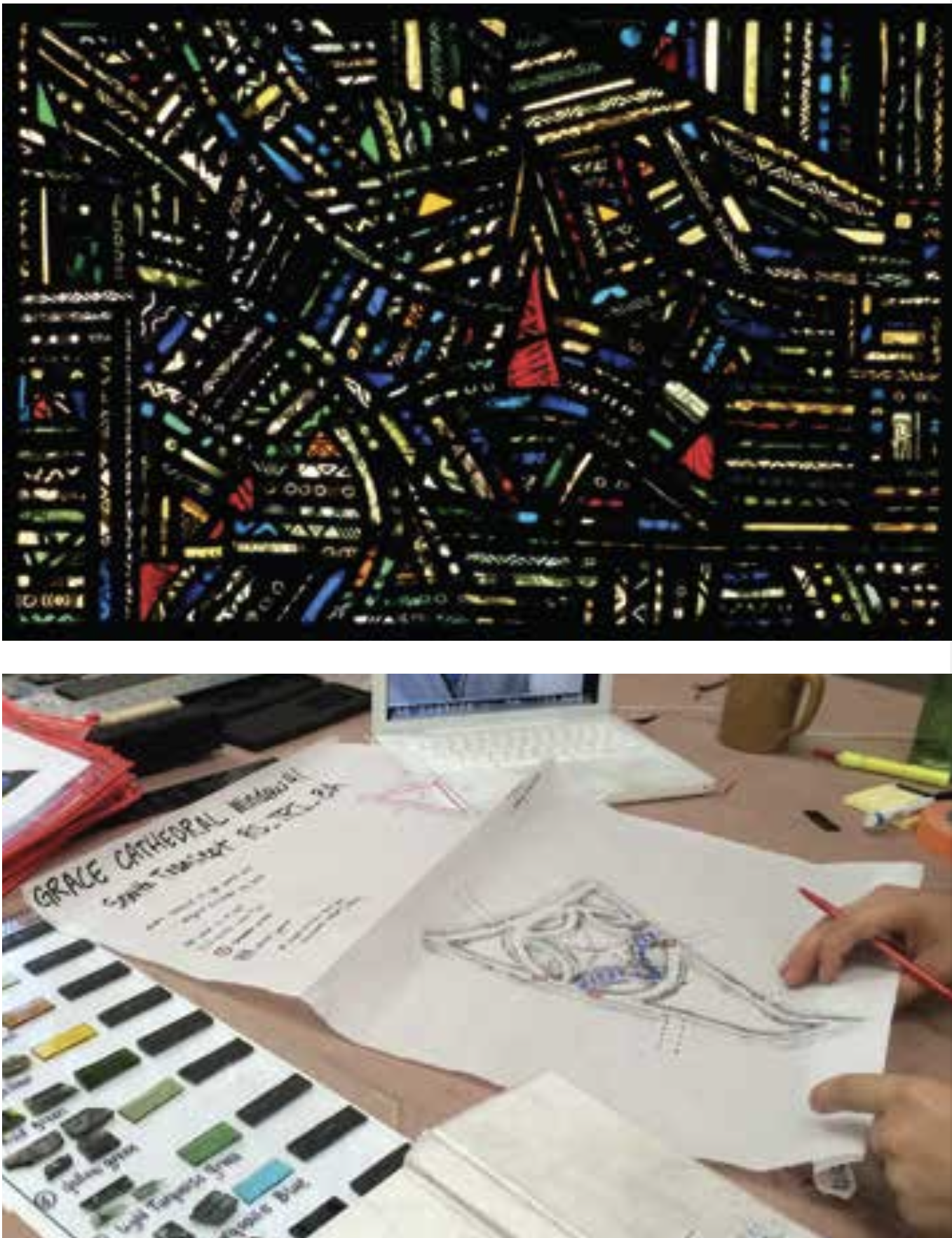
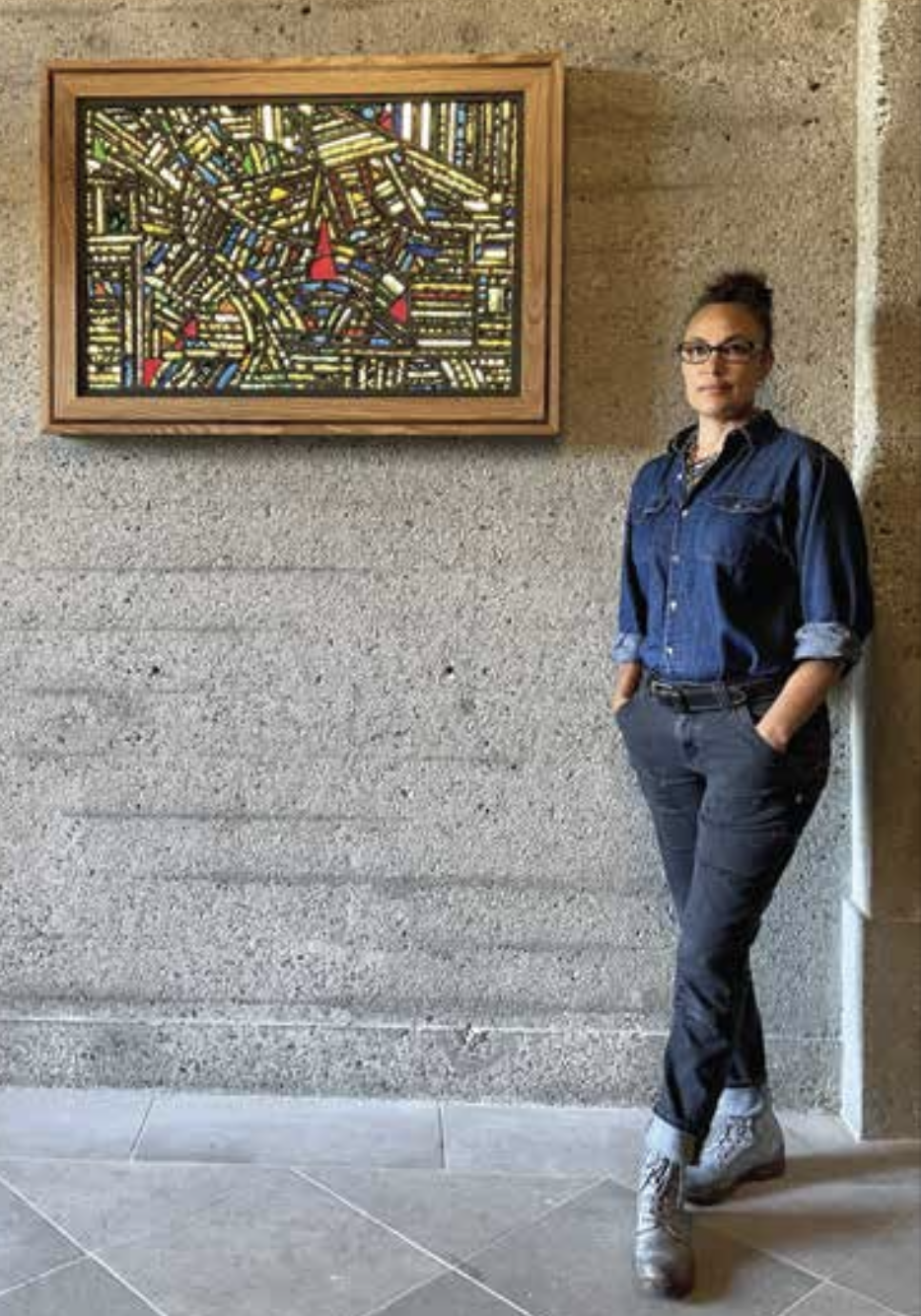
In tandem with conserving and rebuilding the original stained glass windows, a parallel piece emerged. The Nzilani team was encouraged in the final few minutes of each workday to “freeform” build a complementary panel with the broken fillet pieces and off-cuts from the lead came used to rebuild the Testament Windows. (Lead came is produced in six foot lengths. Often the final section isn’t long enough to use in a panel and is traditionally thrown away). The piece was a departure from Nzilani’s typical work in many ways. Preservation normally emulates the work of others by following precise patterns. In this case, the availability of pieces and artists changed daily and was unknown beforehand, so the outcome of the work evolved as it was being built. At its core, the Fillet Panel represents Nzilani’s collaborative culture where the best work exceeds the sum of its parts.
Intent
It quickly became apparent that the theme of repurposing materials to create the Fillet Panel rather than discarding them resonated equally with those who fabricated it, and those who heard the story of its evolution. Initially the panel was intended to be part of the columbarium, hung on the wall with a simple, steel frame designed to complement the cement walls. The idea of the stained glass “rebirth” in another format seemed fitting to the location. Ironically, a final resting place was never agreed upon and the panel was stored at the cathedral while other locations were considered.
In late 2021, Ariana Makau, the Kenyan-American, female owner of Nzilani and stained glass artist, was approached by the cathedral and asked if the Fillet Panel could be displayed at the soon-to-be opened visitor center entrance. Between the time of its inception and this request, Makau had been pursuing greater visibility for the diverse artisans who work for Nzilani.
Viewing the area in which the Fillet Panel was to be displayed (near a kiosk constructed from old “modesty screens” fabricated in the 1950’s for the cathedral in white oak paired with new red oak infills), the artwork’s purpose came into focus. Fillets, like many members of the artistic community, are often considered sacrificial—on the periphery. Yet both are essential, garnering strength in part from reinvention. By creating a piece entirely of fillets, they no longer remain marginal. The panel represents Nzilani’s acknowledgment of the past while having a keen eye on the future—(re)envisioning who (and what) deserves the viewer’s attention.
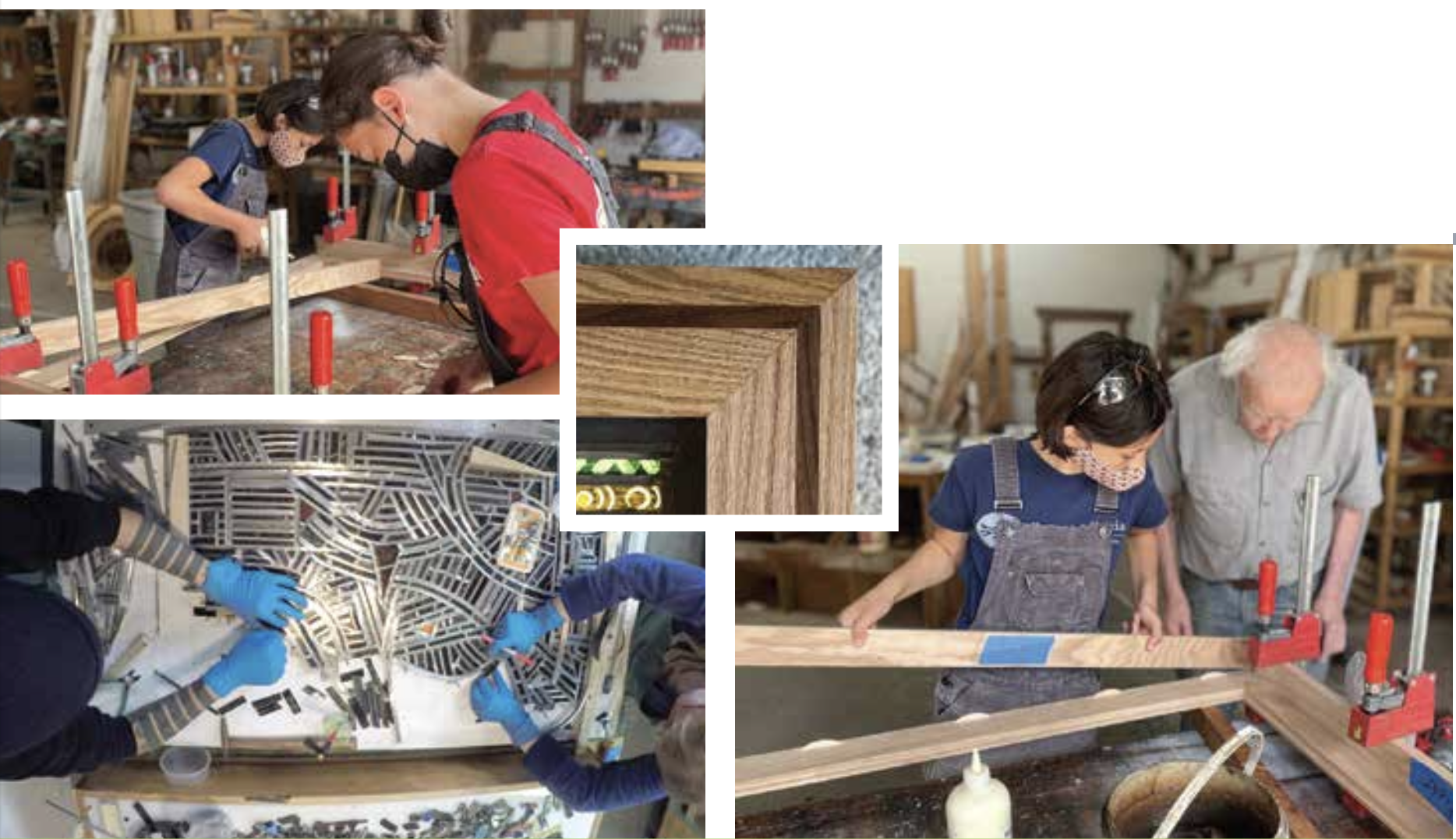
As the company has grown, Makau sees her purpose as a conduit for inclusivity through the projects and pieces Nzilani creates, often incorporating training through cross-generational interaction. The addition of an unstained red oak wooden frame invokes Grace’s participation as a client and ally, while the thin strip of walnut (Ariana’s signature wood preference) embodies the artist embracing and supporting those within the panel. The frame was fabricated by Makau’s two, young teens alongside the watchful tutelage of Albert Wengerd, Nzilani’s building manager and master carpenter. The entire work represents many lifetimes of knowledge tangibly passed on to—and for—the future.
Get In Touch
Nzilani Glass Conservation
3246 Ettie Street,
Oakland, CA 94608

Read the original publication here.